
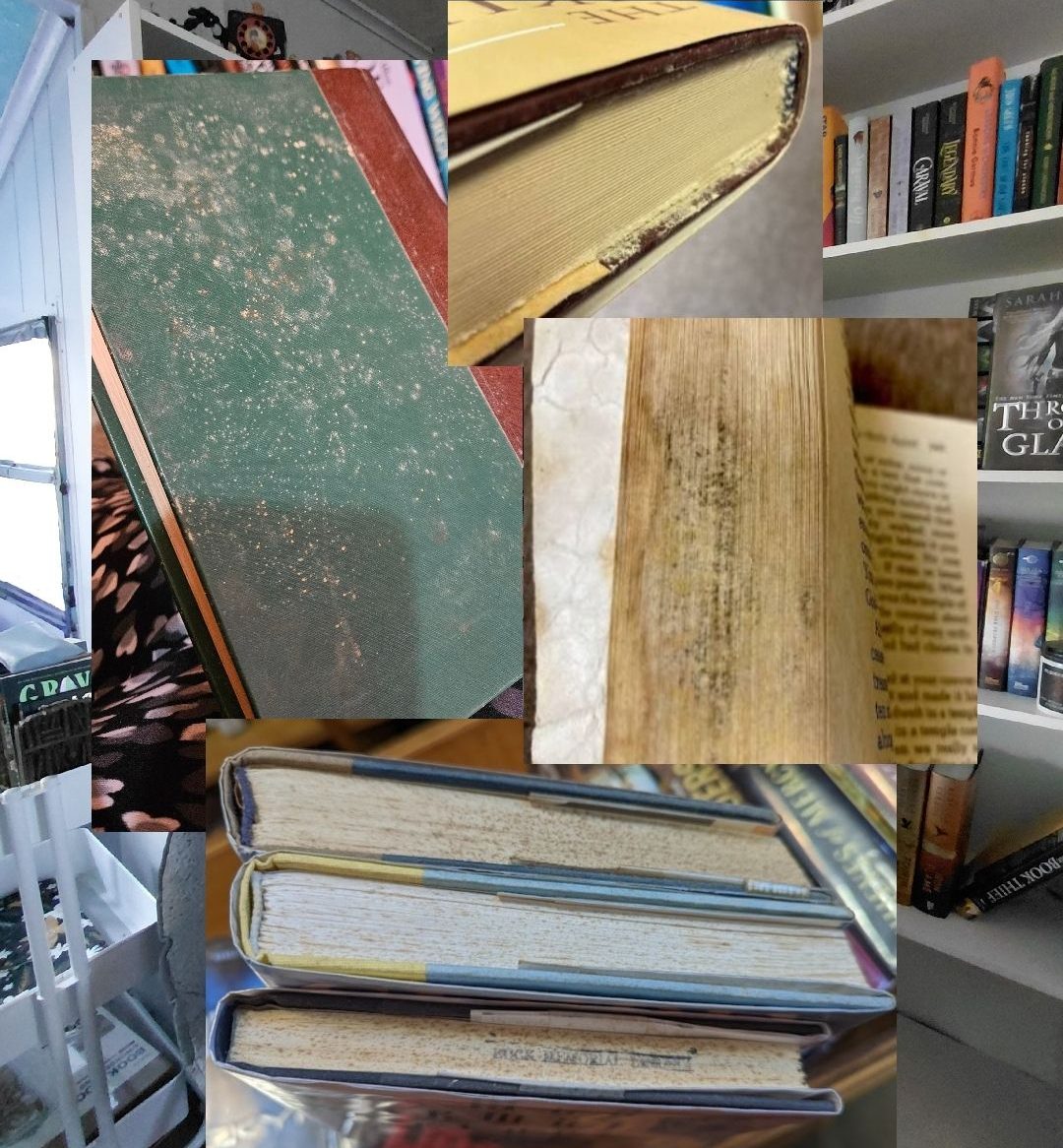
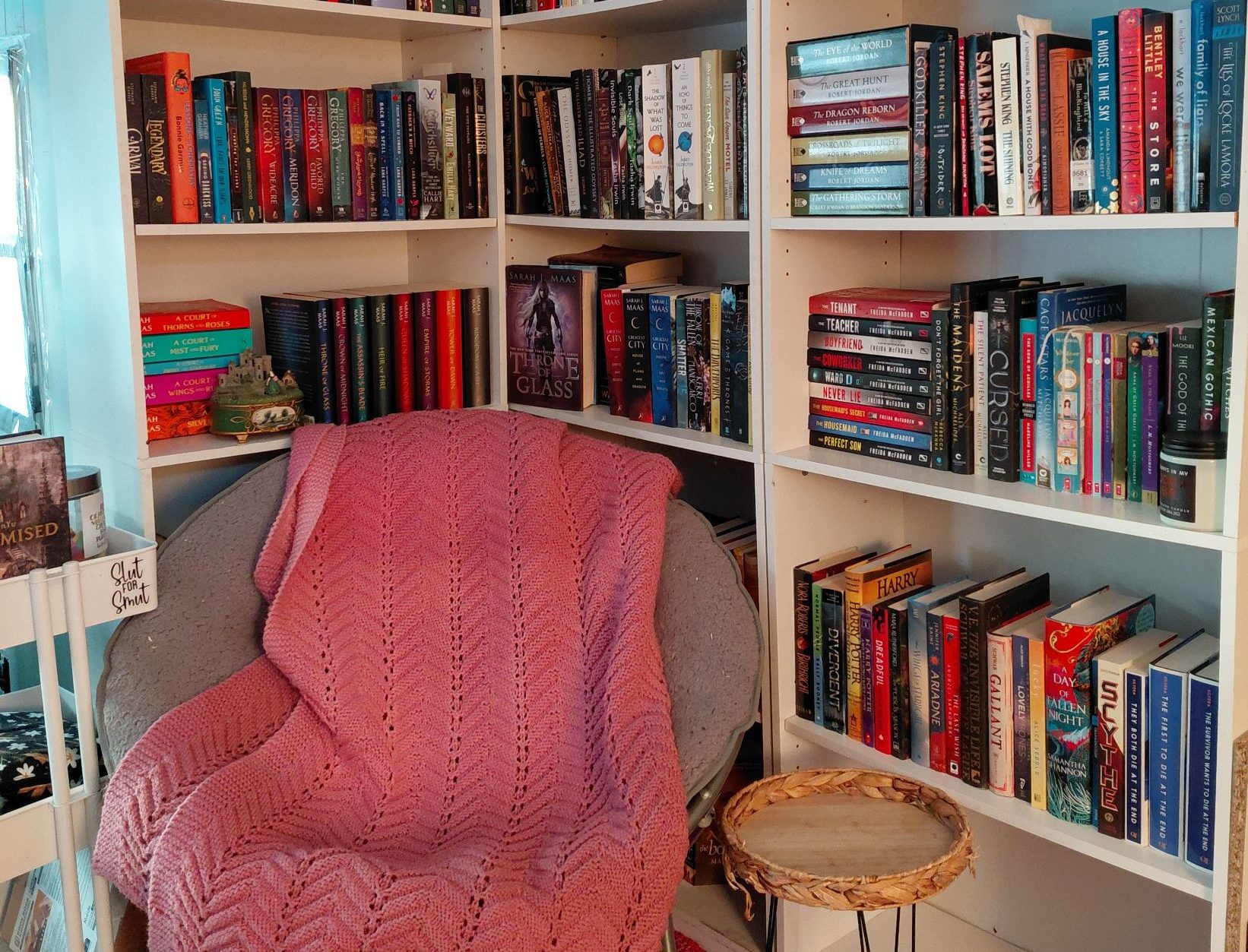
I was setting up some of my book mold preventative methods and thought… huh.. this is something I should talk about on the blog. Today, let’s talk about what book mold is. We’ll discuss how to identify it and how I prevent it on my own shelves.
What Is Book Mold?
Book mold is exactly what it sounds like. It’s fungus that grows in and on books. Why is it an issue? Well, other than it looking and smelling quite gross it affects the structural integrity of the book as well. It also, just like mold that grows other places, can impact our physical, and even mental, and emotional health in extreme ways. The thing about book mold that is especially concerning is its ability to spread through its spores. It can move from book to book and even to other objects like book cases.
What Causes It?
Mold grows and thrives in humid, dark, warm, places with a lack of air flow. Books are especially good victims because they’re made of organic material and are often improperly stored. Storing books in rooms that are too hot with lack of airflow and in cardboard boxes for extended periods of time is a recipe for mold.
Identifying Book Mold
If you are like me and buy a lot of used books, it is important to know how to identify book mold. This way, you don’t bring it home. It can show up in a couple of different ways. On the page edges, on the spine or cover, and inside the book. Once you learn the signs its pretty easy to spot. Now if you’re checking your books and see some spots don’t freak out quite yet. There is another possibility. Let’s talk about what else can cause spots and how to tell the difference.
Foxing VS Mold
Not every spot found on a books pages is mold. Foxing or age spots is caused by age and the deterioration of the books pages over time. Foxing cannot spread. While it still affects the structural integrity of the book, it is not harmful to your health. How do you tell the difference between mold and foxing? Here’s some things to look out for.
Foxing
- brown or rust colored spots
- smells dry like old newspaper or cinnamon
- cannot be wiped off
- embedded into paper fibers


Mold
- green or black spots
- fuzzy or stringy
- smells wet like laundry left in the washer too long or wet wood.
- Signs of water damage


Preventing Book Mold
Thinking about your book collection being taken over by mold is definitely a scary thought but there are a couple of easy things you can do to prevent it. These are the things I personally do at home to keep mold away from my shelves.
1. Check all used books before bringing them home
I like to buy a lot of used books. Whether they are from the library or a thrift store I use both my eyes and nose to check for the signs of book mold before bringing them home.

2. Keep the room the books are stored in at a cool temperature
I like to try and keep the room my books are stored in around 65 degrees Fahrenheit. This way mold won’t have the warmth it needs to grow.
3. Leave room for air flow
Try not to cram books together on shelves. Leave a gap behind your books on the shelves. Don’t push them all the way back.

4. Use dehumidifiers or moisture collectors
I use moisture collectors in the gaps behind the books and on top of the shelves. I get the ones I use at dollar tree. It’s amazing how much water is collected in them after a couple months. I make sure to check on and change these out frequently. I want to invest in a dehumidifier as well but these little guys work great!


5. Avoid storing where they can come into contact with liquid or moisture
Don’t store your books near any water leaks, keep drinks and liquids away from your books, and don’t store in places like a damp basement.
6. Rotate and check your collection frequently
Rotating books ensures they aren’t sitting in the same spot for prolonged periods. Checking on your collection frequently can help both prevent mold and notice any issues before they become a huge problem.
Final Thoughts
Over all book mold is a scary thought but it is preventable. Check any books before adding them to your collection, store your books in a way that mold can’t thrive, and check on them every so often. The picture of the moisture collector after 3.5 months is more full then I would usually let it get honestly. I just kept forgetting to buy new ones whenever I was in town. I hope this information can help someone help keep their books happy and healthy. I’ve heard of people saying there are ways to remove or treat book mold but I have never tried and am not knowledgeable on that subject. Well that’s it for this week! Have you ever had an encounter with book mold? Do you take any measures to prevent it in your collection?


Leave a Reply